

21 Oct 2026 · Buyer guides
Ceramic vs Steel at Retail: Where the Margin and the Returns Really Come From
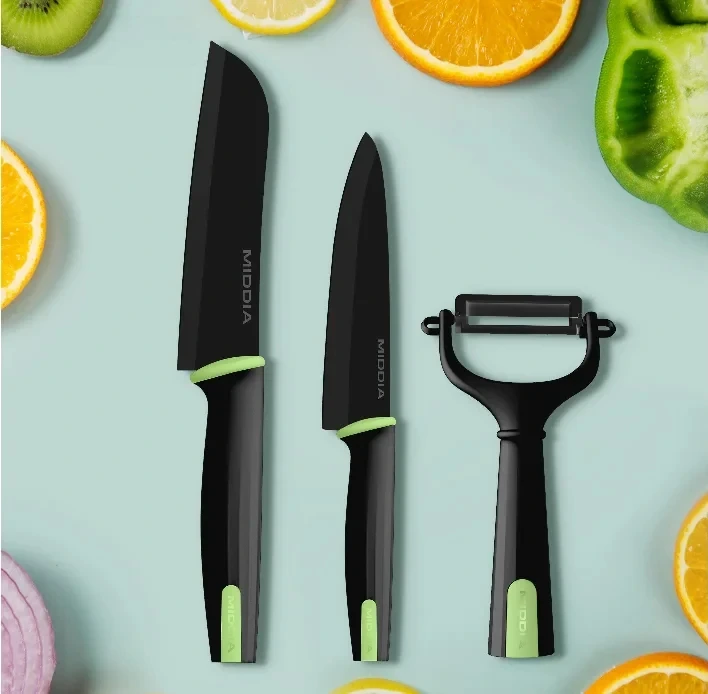
Ceramic knives are usually presented as a premium upgrade to steel. In practice they behave like a different category: higher perceived value, higher margin, and a return rate that depends almost entirely on how well the customer is taught to use them.
This is what actually drives the numbers at retail, based on how the category is bought and sold rather than on brand claims.
Where the margin comes from
A ceramic paring knife and a steel paring knife can leave the factory at similar cost. The difference appears on the shelf:
- Ceramic is sold on benefits the customer can see: no rust, no metallic taste, fruit does not brown, half the weight.
- Steel is sold on familiarity and the ability to sharpen.
That lets ceramic support a higher retail price at the same landed cost, which is why it performs well in gift, housewares and online channels. The margin is real — but it is also the reason the category attracts cheap, badly finished product that damages the whole shelf.
What sells first
For a new range, the SKUs that move are rarely the most technical ones:
- 3-piece sets (santoku or chef + utility + peeler) — the default gift and first-purchase item.
- Peelers — low price point, easy trial, strong repeat.
- Utility / paring knives — the entry price for a single-piece purchase.
- Scissors and baby-food scissors — high attach rate in baby and kitchen channels.
Cleavers and large chef knives look impressive in a catalogue but sell in smaller volumes and generate more damage claims. Stock them for range completeness, not as the lead item.
Where returns actually come from
In this category, returns are rarely about sharpness. They are about expectations:
| Complaint | Real cause | Fix |
|---|---|---|
| “It broke” | Dropped, or used to pry / chop bone | Instruction card, packaging insert, product copy |
| “It went blunt” | Cut on glass or stone board | State the board requirement on the box |
| “The handle faded” | Dishwasher heat + detergent over time | Say “dishwasher safe” only if tested; otherwise hand wash |
| “It arrived chipped” | Packaging did not immobilise the blade | Insert or blade guard, drop-tested pack |
Almost every one of these is cheaper to prevent than to process. A printed card costs cents; a return costs the full margin plus shipping.
The packaging does the teaching
Ceramic knives need three things communicated before first use: do not pry, do not drop, use a wood or plastic board. If that information lives only on your website, most customers will never see it.
Put it on the box or on a small insert. It reduces returns and it makes the product feel considered rather than cheap.
Bundling beats discounting
Ceramic knives discount badly — a 30% markdown signals “novelty”. Bundling works better:
- Knife + peeler + board.
- Knife set + storage block.
- Baby-food scissors + feeding spoon set.
Bundles raise average order value without eroding the unit price, and they let you use slower-moving SKUs as components.
What to check before you commit to a range
- Ask for the sell-through of the exact set configuration, not the category.
- Check whether the packaging is retail-ready or needs repacking — repacking kills margin.
- Confirm the colour range can be replenished. A colour that sells out and cannot be reordered is worse than a colour you never stocked.
- Decide the returns policy before the first shipment, and put the care instructions in the box to support it.
The short version
Ceramic sells on a clear promise: cleaner cutting, no rust, no taste transfer. Protect that promise with packaging that survives shipping and instructions that prevent misuse. The buyers who do this see a category that holds its price; the ones who don’t end up discounting a product the customer was never taught to use.
Sourcing ceramic tools?
Send the models, target market and quantity and we will come back with a configuration and a quotation.